Paint Protection Film (PPF) has become the gold standard for preserving a vehicle’s paintwork against scratches, rock chips, UV damage, and environmental contaminants. While most discussions focus on the film’s thickness, self-healing properties, or hydrophobic coatings, one critical component often goes unnoticed: the adhesive layer.
The adhesive is what allows PPF to securely bond to a vehicle’s surface while remaining removable, durable, and invisible. Without advanced adhesive technology, even the highest-quality PPF would fail to provide reliable long-term protection.
Modern Paint Protection Films rely on sophisticated Pressure-Sensitive Adhesives (PSAs) that ensure strong adhesion, optical clarity, and long-lasting performance. In this article, we’ll explore how pressure-sensitive adhesives work, why they are essential in PPF applications, and what vehicle owners should know when selecting a premium paint protection solution.
What Is a Pressure-Sensitive Adhesive (PSA)?
A Pressure-Sensitive Adhesive is a specialized adhesive that forms a bond when light pressure is applied to a surface. Unlike traditional adhesives that require heat, water activation, or chemical curing, PSAs create an immediate bond simply through contact and pressure.
In the automotive PPF industry, PSAs are engineered to:
- Securely attach the film to painted surfaces
- Remain clear and invisible
- Resist heat and weather exposure
- Allow repositioning during installation
- Be removable without damaging paint
These unique properties make pressure-sensitive adhesives ideal for automotive paint protection applications.\
The Structure of Modern Paint Protection Film
Most premium PPF products consist of several layers:
1. Top Coat
Provides:
- Self-healing properties
- UV resistance
- Hydrophobic performance
- Gloss enhancement
2. Polyurethane Layer
Acts as the primary impact-absorbing barrier against:
- Rock chips
- Scratches
- Road debris
3. Adhesive Layer
The pressure-sensitive adhesive that bonds the film to the vehicle.
4. Release Liner
A temporary protective layer removed during installation.
While the polyurethane layer receives most of the attention, the adhesive layer is equally important because it directly affects durability, appearance, and long-term performance.
How Pressure-Sensitive Adhesives Work
Pressure-sensitive adhesives create a bond through molecular attraction between the adhesive and the vehicle’s painted surface.
When installers apply pressure using:
- Squeegees
- Installation tools
- Hand pressure
the adhesive spreads evenly across microscopic surface irregularities, creating strong contact with the paint.
This process produces a reliable bond without requiring:
- Heat curing
- Chemical activation
- Permanent glue
The result is a secure attachment that can last for years while remaining removable when necessary.
Why Adhesive Technology Matters in PPF
Not all adhesives are created equal.
The quality of the adhesive directly affects:
- Installation success
- Film longevity
- Surface appearance
- Paint safety
- Removal process
Premium manufacturers invest heavily in adhesive research because poor adhesive performance can cause major issues even when the film itself is high quality.
Key Benefits of Advanced PSA Technology
1. Strong Yet Safe Adhesion
One of the most important characteristics of modern PPF adhesives is balancing holding strength with paint safety.
The adhesive must:
- Stay securely attached for years
- Resist lifting and peeling
- Withstand environmental stress
At the same time, it should:
- Remove cleanly when needed
- Leave minimal residue
- Protect the original paint finish
Premium PSAs are designed specifically to achieve this balance.
2. Optical Clarity
Vehicle owners choose PPF because it preserves the appearance of factory paint.
Low-quality adhesives can create:
- Cloudiness
- Haze
- Yellowing
- Distorted reflections
Advanced pressure-sensitive adhesives maintain exceptional transparency, allowing the paint color and finish to remain fully visible.
This is particularly important for:
- Luxury vehicles
- Dark paint colors
- Metallic finishes
- Show cars
3. Heat Resistance
In hot climates such as the UAE, temperatures can place tremendous stress on automotive materials.
A quality PPF adhesive must tolerate:
- Extreme sunlight
- High panel temperatures
- Continuous UV exposure
Premium PSAs are formulated to resist softening, shrinking, or losing adhesion under intense heat.
Without proper heat resistance, film edges may begin lifting or bubbling over time.
4. Flexibility and Conformability
Modern vehicles feature complex body lines, curves, and contours.
The adhesive must remain flexible enough to allow the film to conform to:
- Curved panels
- Bumpers
- Mirrors
- Door handles
- Complex body designs
Advanced adhesive systems work together with the polyurethane film to ensure a seamless appearance across all vehicle surfaces.
The Importance of Repositionable Adhesives
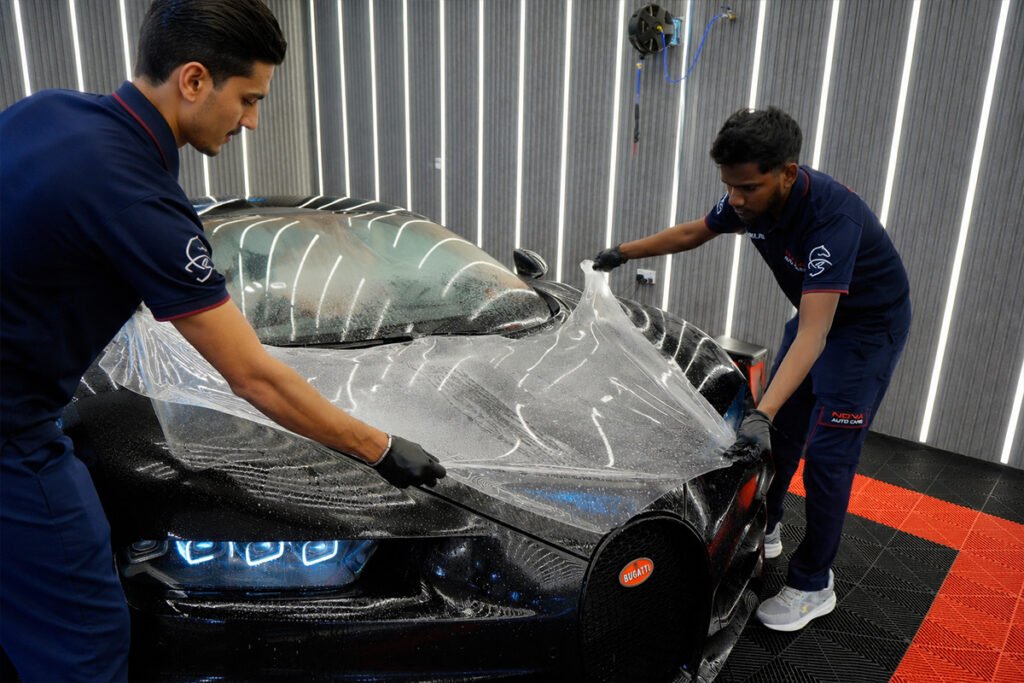
During installation, professional technicians often need to adjust the film’s position before final adhesion occurs.
High-quality PPF adhesives provide a temporary repositioning window that allows installers to:
- Align edges accurately
- Remove trapped air
- Eliminate wrinkles
- Achieve perfect fitment
Once installation is complete and pressure is applied, the adhesive develops its full bonding strength.
This feature significantly improves installation quality and reduces application errors.
Resistance to Environmental Contaminants
Vehicles are constantly exposed to:
- Water
- Road salt
- Dust
- Pollution
- Bird droppings
- Tree sap
Premium adhesive systems are engineered to prevent moisture intrusion and maintain strong adhesion despite these environmental challenges.
This helps ensure long-term reliability and appearance.

Common Problems Caused by Low-Quality Adhesives
Inferior adhesive technology can result in several issues over time.
Edge Lifting
The film begins separating from panel edges due to weak bonding strength.
Yellowing
Poor adhesive formulations can discolor after prolonged UV exposure.
Adhesive Residue
When the film is removed, excessive adhesive may remain on the paint surface.
Bubbling
Weak adhesive performance can allow air or moisture pockets to form beneath the film.
Reduced Lifespan
The entire PPF system may fail prematurely despite the film itself being undamaged.
These issues highlight why adhesive quality should never be overlooked when selecting PPF.
Acrylic-Based Adhesives: The Industry Standard
Most premium Paint Protection Films utilize advanced acrylic-based pressure-sensitive adhesives.
Acrylic adhesives are favored because they offer:
- Excellent transparency
- Strong UV resistance
- Long-term durability
- Heat stability
- Clean removability
Compared to alternative adhesive technologies, acrylic PSAs provide the best balance of performance and longevity for automotive applications.
Why Adhesive Technology Matters in Hot Climates
In regions with extreme temperatures, adhesive performance becomes even more critical.
Vehicles parked outdoors can experience surface temperatures exceeding 70°C (158°F).
Under these conditions, the adhesive must continue to:
- Maintain bonding strength
- Resist shrinkage
- Prevent edge lifting
- Preserve optical clarity
Premium PPF manufacturers design their adhesives specifically for these demanding environments.
For vehicle owners in hot-weather regions, choosing a film with advanced adhesive technology can significantly improve long-term results.
Professional Installation Is Essential
Even the best adhesive cannot compensate for poor installation practices.
Proper installation includes:
- Thorough surface preparation
- Paint decontamination
- Precise film positioning
- Correct pressure application
- Edge sealing
Experienced installers understand how to maximize adhesive performance while minimizing installation defects.
This is one reason why professional installation remains crucial for achieving optimal PPF longevity.
Final Thoughts
When evaluating Paint Protection Film, most people focus on thickness, self-healing capabilities, or brand reputation. However, the adhesive layer plays a fundamental role in the film’s overall performance.
Advanced pressure-sensitive adhesive technology provides:
- Secure bonding
- Optical clarity
- Heat resistance
- Long-term durability
- Safe removability
Without a high-quality adhesive system, even premium polyurethane film cannot perform as intended.
For vehicle owners seeking reliable paint protection, understanding adhesive technology offers valuable insight into what truly separates high-quality PPF from lower-grade alternatives. The combination of advanced film construction and premium pressure-sensitive adhesives ensures your vehicle remains protected, attractive, and well-preserved for years to come.
1. What is a pressure-sensitive adhesive in PPF?
A pressure-sensitive adhesive (PSA) is the bonding layer that allows Paint Protection Film to adhere securely to a vehicle’s paint when pressure is applied, without requiring heat or chemical curing.
2. Can PPF adhesive damage factory paint?
No. High-quality PPF adhesives are designed to be paint-safe and can typically be removed without damaging the factory finish when professionally installed and removed.
3. Why is adhesive quality important in hot climates?
In high-temperature environments, premium adhesives help prevent bubbling, edge lifting, yellowing, and loss of adhesion, ensuring long-lasting PPF performance and appearance.